


Long before Steamboat Springs became “Ski Town USA,” it was famous for its soothing hot springs. In the heart of the Yampa Valley, steaming mineral waters bubbled from the ground, drawing visitors for centuries. They were known to the earliest visitors, the Yampatika Utes, as the Medicine Springs, a place of healing, restoration, and community.
Every summer, the Utes would return to this place to fish, hunt, and soak in the mineral-rich waters. Local lore holds that the site of the last great battle in Steamboat Springs between the Utes and the Arapahos was just across Lincoln Ave. on Snake Island on the Yampa River.
The Crawfords and the “Bath Spring”
1875 brought a new chapter. James Crawford and his family, the first white settlers in the valley, discovered the springs known to the Utes. Drawn to their warmth and reputed healing powers, the Crawfords began bathing there regularly. James Crawford renamed it the Bath Spring, and before long, it became part of the daily life of early settlers.
Did You Know? James Crawford is also credited with founding the town of Steamboat Springs. His decision to settle near the springs was as much about the water as it was about the land.
By 1885, the Crawfords, with some ingenuity and a bit of engineering, re-channeled Spring Creek, which had originally run through the spring, to make bathing more practical. They built the first log shelter over the spring, a modest but important step toward making it a true community gathering place.
Just two years later, in 1887, the log shelter was replaced with a simple A-frame bathhouse. Twelve years after that, it was upgraded to a larger building made of native stone, complete with both indoor and outdoor pools.

The Heart Spring as it appeared in the early 1900s, before the modern pools were constructed.
A Grand Investment
In 1909, the Steamboat Springs Town Company poured significant resources into developing the springs. They constructed a large native stone bathhouse with indoor and outdoor pools fed by the Heart Spring. The cost? $50,000, the equivalent of about $1.7 million today. This was more than just a place to take a soak; it was a showpiece for the town’s growing reputation as a visitor destination.
Did You Know? The pillars at the entrance of Old Town Hot Springs parking lot today are the very same pillars built in 1909.

The view of the original 1909 pool and Lincoln Ave.
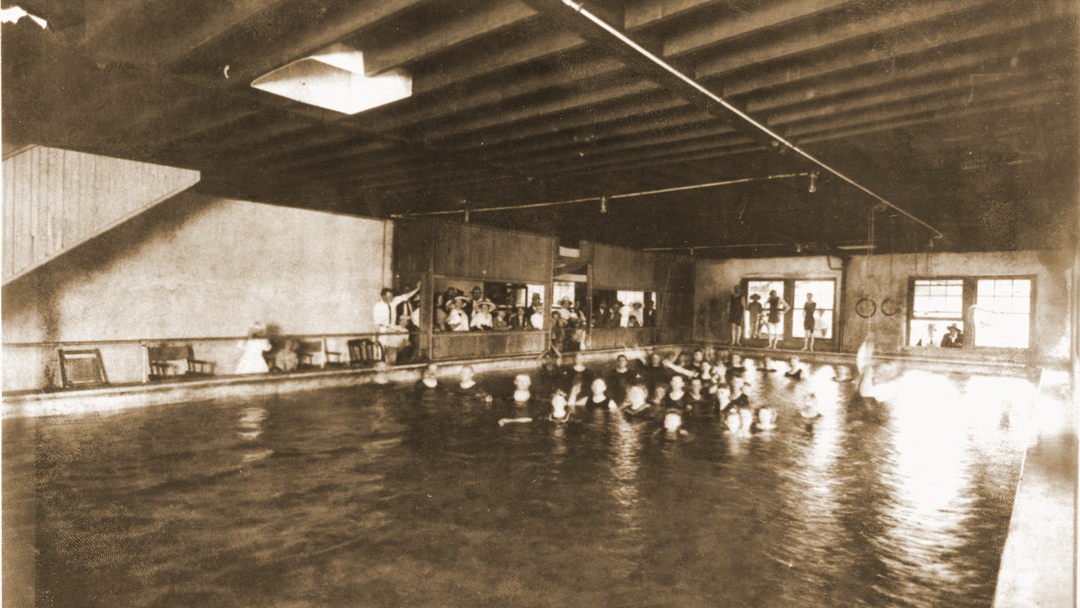
The view from the indoor bathhouse in 1920.
The Spring Gets Its Final Name
By 1931, the facility had a second floor added, and local businessman H.W. Gossard took over the lease. Gossard was no stranger to big ideas; he was one of the founders of Steamboat’s famous Winter Carnival tradition. He surrounded the Bath Spring with a stone wall in the shape of a heart and gave it the name we still use today, the Heart Spring.
His vision went further than a name change. He planned to bottle the mineral water and sell it as a health tonic, under the brand “Rocky Mountain Miriquelle Spa.” Unfortunately, the venture didn’t work financially, and Gossard ended his lease.
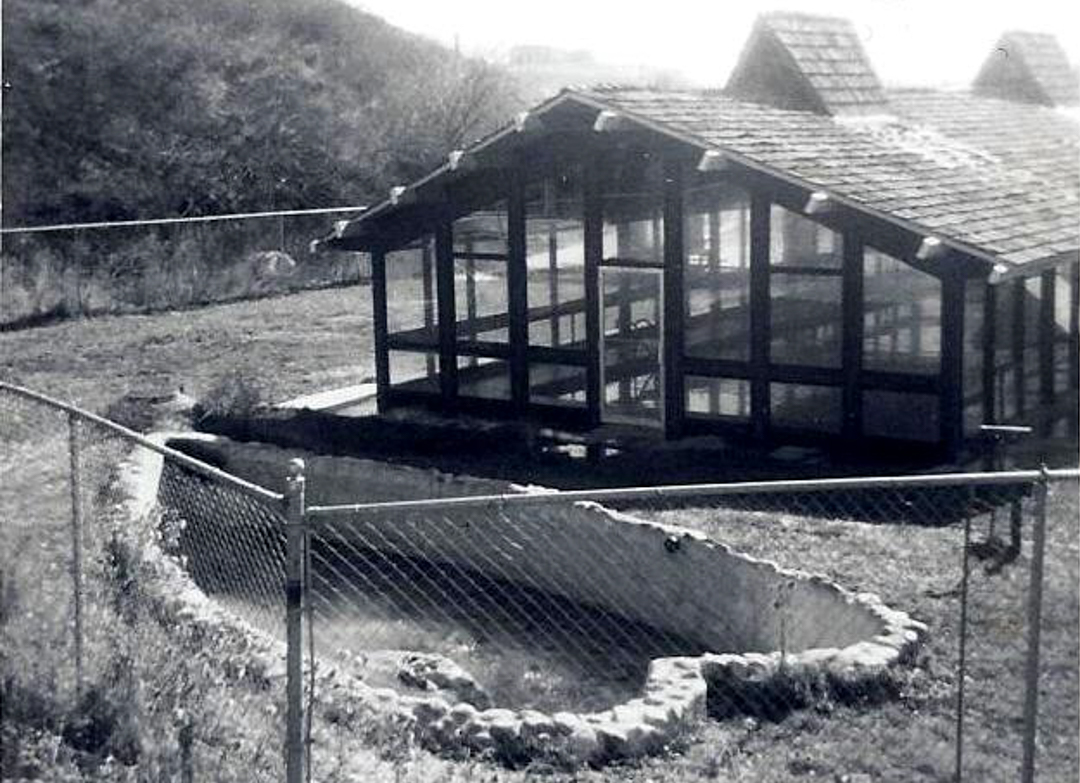
H.W. Gossard’s heart-shaped stone wall around the spring gave the landmark its lasting name.
Community Steps In
The economic downturn of the Great Depression took a heavy toll on Steamboat Springs. In 1935, Gossard returned control of the hot springs to the Steamboat Springs Town Company, which sold it to a newly formed non-profit: the Steamboat Springs Health and Recreation Association (SSHRA). SSHRA adopted the business trade name “Old Town Hot Springs” in 2006 and is the first established nonprofit in Steamboat Springs.
The backstory of the formation of the nonprofit is worth noting. At the time, the Steamboat Springs Town Company owned more than 300 acres of local land, including the mineral springs, the golf course, rodeo grounds, ski hill (today’s Howelsen Hill), and Strawberry Park Hot Springs. They offered to sell it to the town, but the town couldn’t take on the debt from the hot springs without an election, and time was short.
So, a group of civic-minded leaders, including the mayor, town board members, and local businessmen, formed a non-profit association, SSHRA, to assume the debt and purchase the Bath House and Strawberry Park Hot Springs. The arrangement allowed the springs and other community assets to remain in public use without the need for a taxpayer vote.
Did You Know? Without the quick action of the SSHRA founders in 1935, the springs and surrounding lands might have been sold into private hands and lost to public use forever.
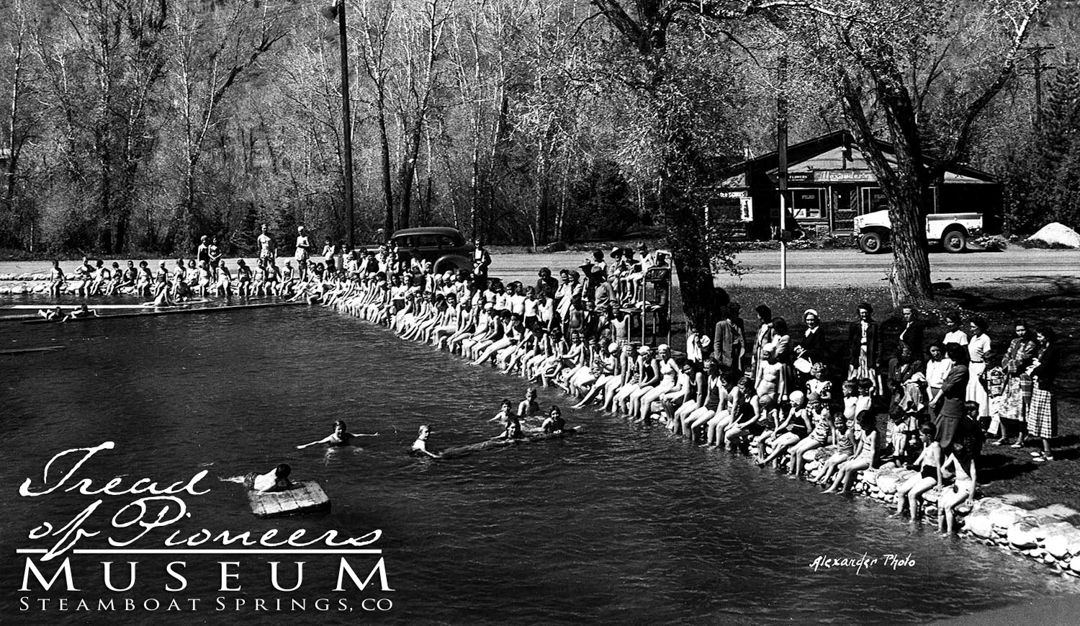
Children and adults alike enjoy the springs that have been at the heart of our valley for generations.
A Legacy That Still Flows
From a sacred Ute gathering place, to a log bathhouse, to a Depression-era community rescue, the Heart Spring has been the literal and figurative center of Steamboat Springs for generations. It still pumps over 250 gallons of natural mineral spring water every minute, just as it has for centuries, continuing to offer the same warmth, healing, and connection that first drew people here.
Ninety years after the formation of the SSHRA, Old Town Hot Springs remains a community treasure and rooted in the deep history of the Yampa Valley.